Who it's for
Who SR-XRDis for
Four situations, four different reasons the same method is worth using.
Who it's for
01 Exploration
A straight answer, in time
Exploration asks two kinds of question. How much is there, which the assays answer. And what it is: which mineral holds the metal, whether that mineral can be extracted, whether there is anything in the rock that stops the project before it starts. The second kind is mineralogy's job, and it supports the first: the same sample, the assay for the grade and the diffraction pattern for the minerals behind it, with the chemistry back-calculated from the mineralogy so the two agree or the disagreement is found early.
Answers like these are only useful if they are certain, and certainty comes from resolution. Two minerals that merge into one peak on a laboratory diffractometer are separate peaks at a synchrotron. A phase at a fraction of a percent is detected and quantified: below one percent as a rule, and with careful grinding, preparation with standards and controls run alongside, far below it. Mintti, our analysis system, puts the question directly to the data, is mineral X present, across every sample, with the evidence for each answer in the file. A no can be defended and a yes can be acted on.
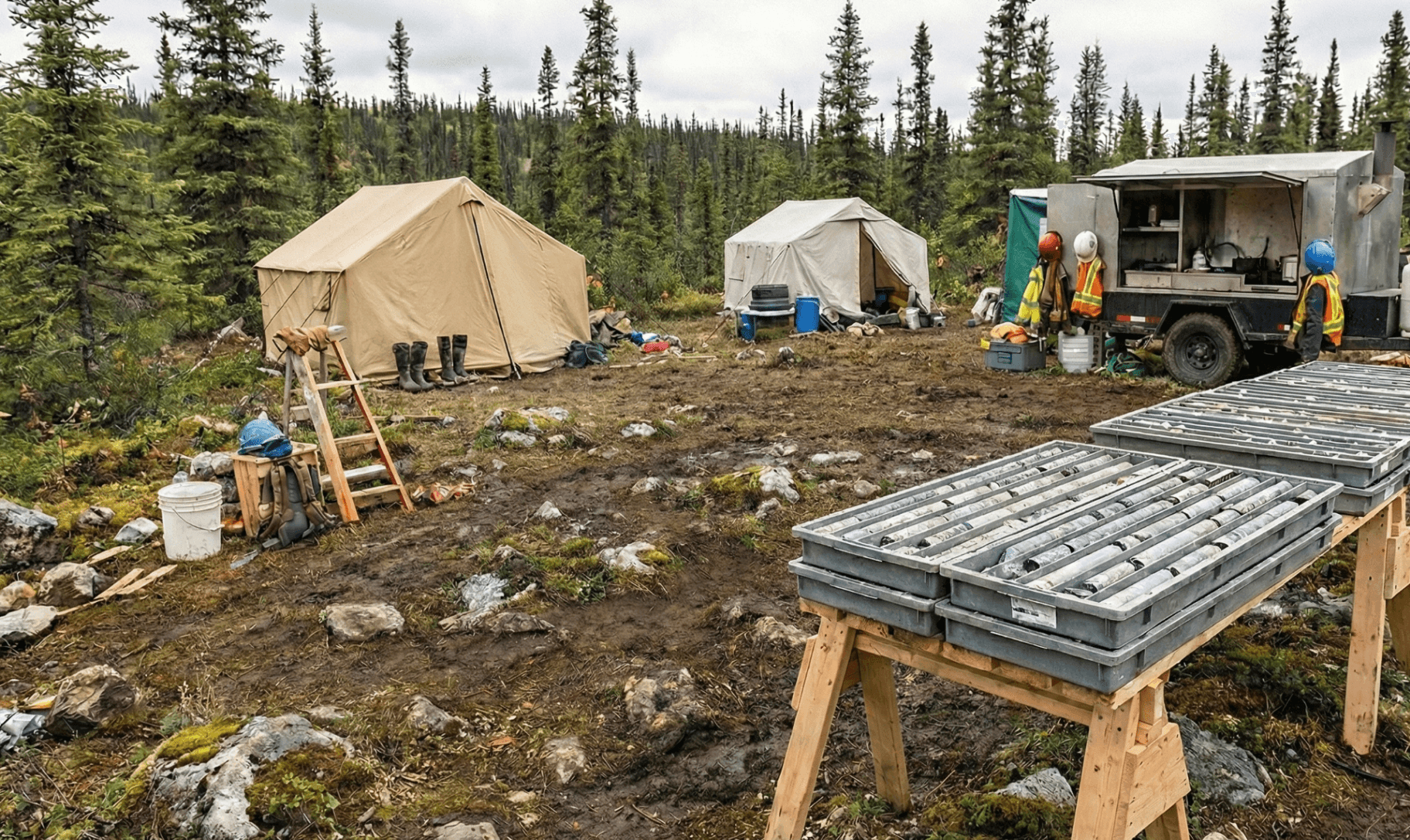
The sample counts are smaller here than in a feasibility study, and the pulps that went for assay are enough, since the measurement uses milligrams. What matters is the time: measured in a day, first results within a day of the data, so the answer arrives while the programme is still being decided rather than after it.
How we'd run it
Smaller sets ride on shared beamtime, which is also how several projects from one company go through as one campaign: each project keeps its own batch, standards and report, and the campaign price applies to all of them.
02 Studies
Every mineral, everywhere
A feasibility study plans everything at once: the plant, the permits, the environmental impact, the infrastructure, the equipment. All of it rests on knowing what the deposit is made of, from the surface down to the ore and around it, gangue and host rock included, not only the valuable minerals. This is what SR-XRD with Mintti is built to give. Every phase in every sample identified and quantified, the amorphous fraction included where it matters, the chemistry back-calculated from the mineralogy so each sample reconciles with its assay, and any question about the deposit run across the whole set, sample by sample.
Breadth is where the throughput pays. Thousands of samples from the drilling programme are measured in a day and analysed in hours, so the geometallurgical domains and the block model are drawn from the programme itself rather than from a few composites, and the per-sample price falls furthest at exactly this scale. The result is a study built on the whole deposit, with the evidence behind every phase available to whoever reviews it.
How we'd run it
The testwork programme is usually written by a study consultancy or a metallurgical laboratory, and we work inside it. A trial batch of the study's own samples, compared with the mineralogy already in hand, is the usual first step. The full campaign follows within the study schedule, and the review with the customer runs alongside the study as its questions change.
03 Operations
The reference the instruments are checked against
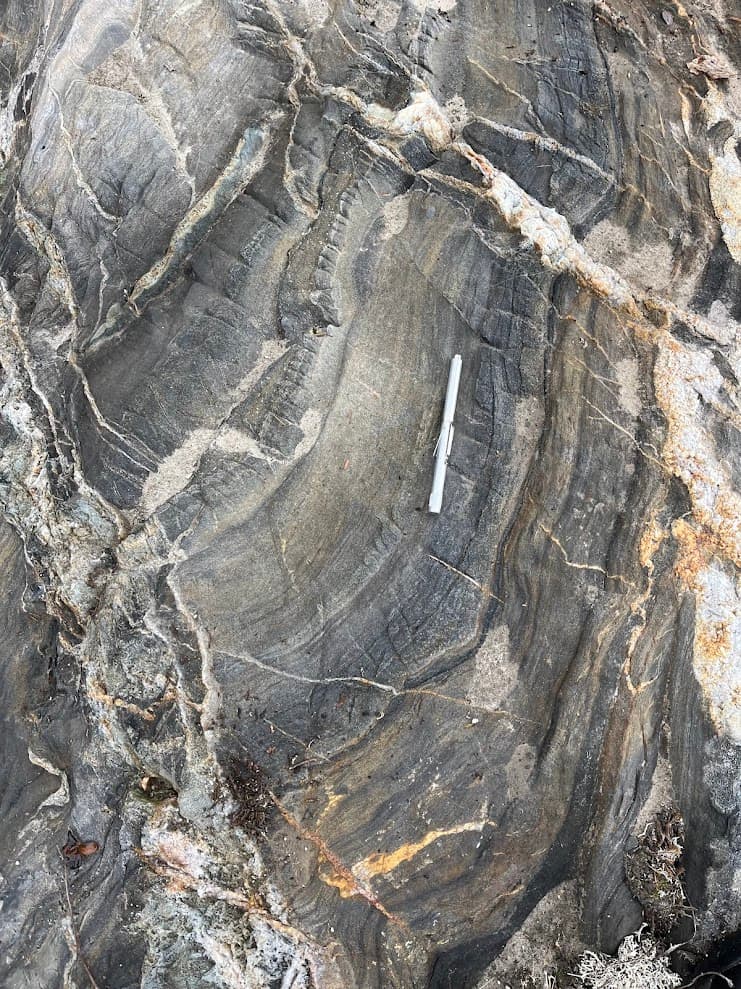
An operating mine monitors in real time with instruments on site, and a campaign measured at a synchrotron will never be that fast. Its place is different: the reference set of higher precision that the on-site instruments are calibrated against and audited with, and that the geometallurgical model behind them is updated from. A reference set finds the minor phases the instrument cannot resolve and quantifies the amorphous fraction it cannot see, and it does so from milligrams per sample, so it is built from what is already being sampled rather than from more material out of the workings. Whoever needs the calibration or the audit, the set is the same.
How we'd run it
Periodically, as a set: a series of composites or grade-control pulps measured together, the results compared with the instrument's own, and the calibration or the model adjusted from the differences.

04 Waste and circularity
Finding what was missed
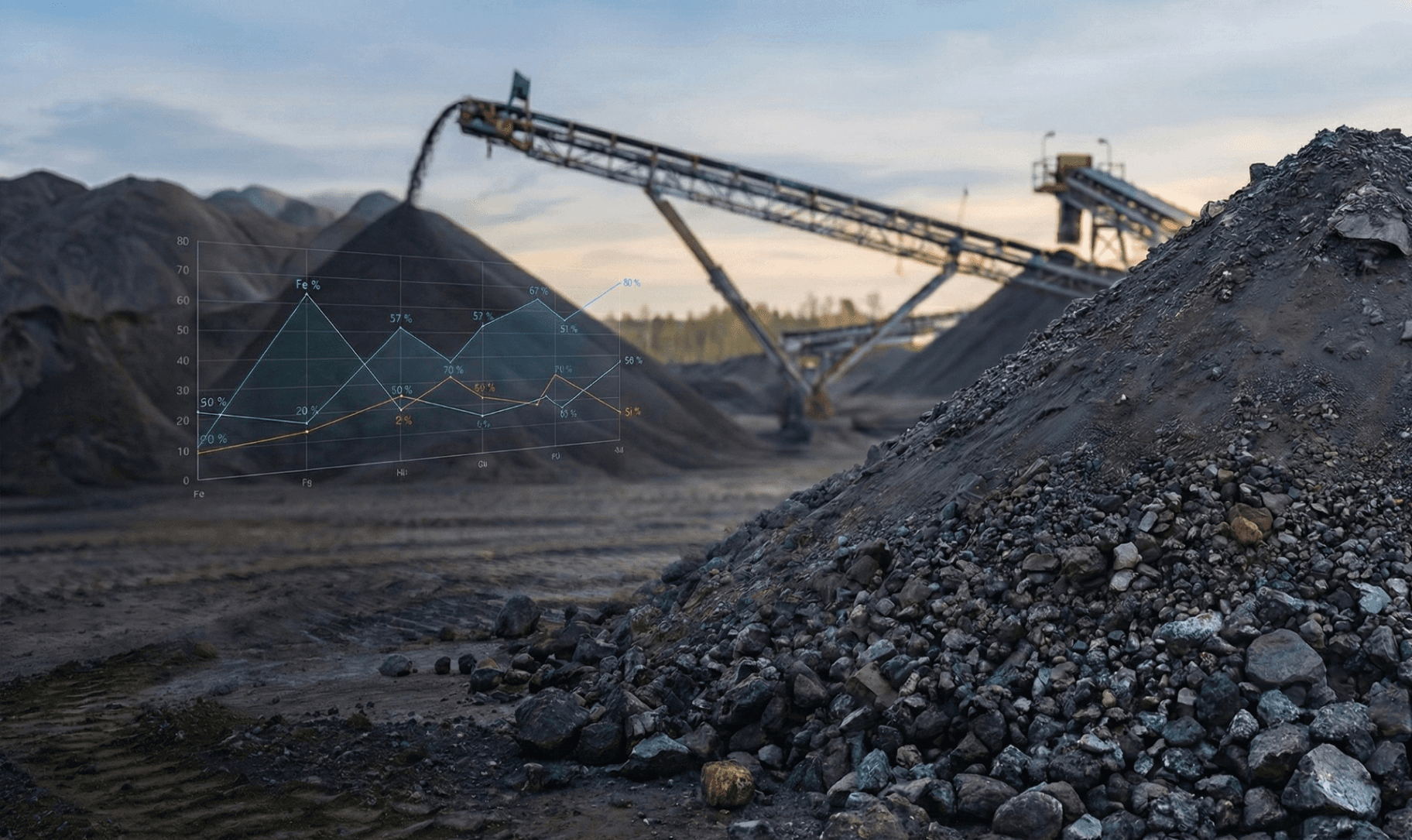
Tailings and waste rock are heterogeneous: different minerals in different rock, in different shapes and sizes, and a composite reports the average of all of it. What earlier characterisation missed sits in that variation: trace phases below the detection floor of the time, minerals that could not be identified with the methods of the time, and minerals nobody valued then that are critical raw materials now. Resolution finds the minor phases, deterministic identification names the difficult ones, the amorphous fraction is quantified instead of written off, and the hypothesis test asks whether a particular mineral is anywhere in the facility, sample by sample. The inventory becomes what is actually there, by mineral.
Sample mass helps here directly: a representative sample of a few milligrams rather than a kilogram bag, so the sampling density can go up across the pile without the logistics going up with it. And there is usually no hurry. The pile has been there for years and will be there for more, so sampling can be planned and accumulated, and the measurement booked when the set is ready.
How we'd run it
Alongside the acid-base accounting and kinetic tests the classification already requires, with the sampling plan and chain of custody documented, for whoever is asking the question: the operator, the consultancy or engineer of record working for them, a public inventory programme, or a developer assessing an old facility as a resource.
Tell us about your samples
Whether it is a trial batch or a drilling program, we would like to hear what you are working on.